High-Volume Hiring: How to Plan, Screen and Hire at Scale
High-volume hiring fills many similar roles fast. Plan back from the hire count, screen every applicant the same day and keep one set of criteria.
Oct 28, 2026 • 14 min read
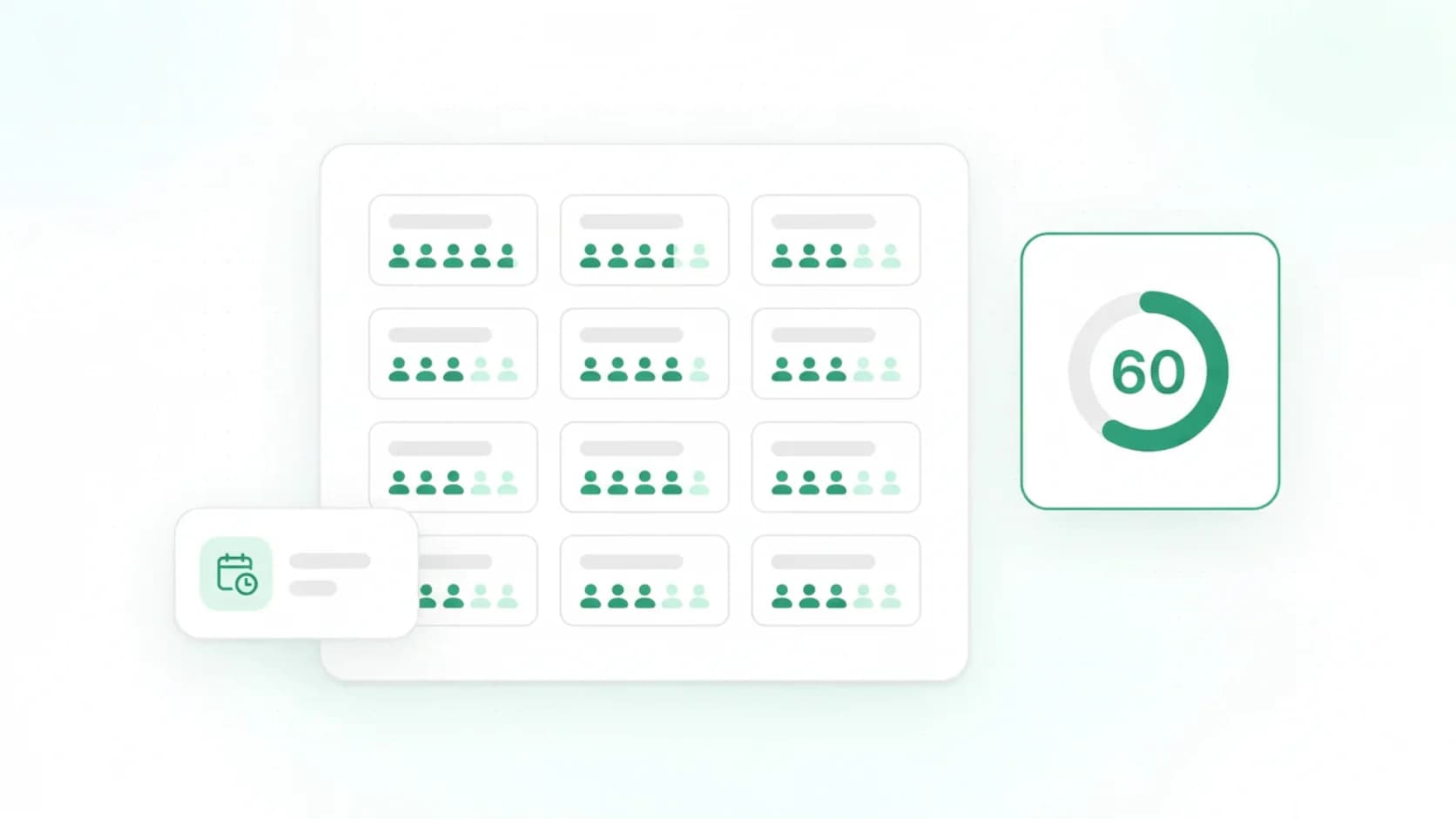
High-volume hiring is the work of filling many similar roles in a short time, such as 60 seasonal store associates in 6 weeks or 200 agents for a new call center. It works when you plan back from the hire count, cut the application to the facts that decide, screen every applicant against the same criteria on the day they apply and keep a person on each hiring decision. In the 60-hire example below, first screens by phone would take one recruiter at least 125 hours, so the first screen decides whether the plan holds.
US employers in accommodation and food services made 9.4 million hires in 2025, and retailers made 6.9 million (BLS JOLTS). In iCIMS's 2025 survey of 1,000 US frontline hiring managers, 32% said candidates drop off most at the interview stage, ahead of scheduling at 20% (iCIMS).
What counts as high-volume hiring?
High-volume hiring has no official threshold. It is high volume when 3 things are true at the same time:
- You hire the same role many times, for example cashier, warehouse associate or customer service agent.
- A deadline drives the count: a peak season, a new site or a contract start sets the date, and the number of hires follows from it.
- Applicants outrun your screening time, so your team cannot read and call every applicant with care before the good ones take another job.
Size is relative. 40 store hires in 6 weeks can overload a team of 2 recruiters, while a national chain handles that in a normal month. The common causes are seasonal peaks, new locations and jobs with high turnover. When store applicants arrive faster than you can call them, Firstview for retail hiring checks shift availability and location on every CV, and applicants interview from their phone the day they apply. A person decides who moves on.
Which industries hire at high volume?
Of the 4 industries in the table, accommodation and food services hire at the highest rate: in 2025, these employers made about 66 hires for every 100 employees. Our table cuts the 2025 annual tables of the Bureau of Labor Statistics Job Openings and Labor Turnover Survey (JOLTS) down to 4 industries that often hire at volume.
| Industry (US, 2025) | Hires | Average monthly hires rate | Average monthly quits rate | About hires per 100 employees in the year |
|---|---|---|---|---|
| Accommodation and food services | 9.4 million | 5.5% | 4.2% | 66 |
| Health care and social assistance | 8.7 million | 3.1% | 2.0% | 37 |
| Retail trade | 6.9 million | 3.7% | 2.6% | 44 |
| Transportation, warehousing, and utilities | 3.3 million | 3.8% | 2.2% | 46 |
| All private employers | 59.0 million | 3.6% | 2.2% | 43 |
Sources: BLS JOLTS annual hires levels, hires rates and quits rates, not seasonally adjusted. The last column is our arithmetic: the average monthly hires rate times 12. JOLTS counts hires, not people, so one person hired twice counts twice.
What the numbers mean for planning:
- In accommodation and food services, the average monthly quits rate was 4.2% in 2025, against 1.1% for layoffs and discharges (BLS JOLTS), so most turnover there is people who leave on their own. Each quit you prevent is one less hire to make.
- Retail's hires per 100 employees (44) are near the private-sector figure (43). Retail's large hire count comes from its large workforce, not from a high hires rate.
- Retail hiring fell after 2021. Retailers made 10.2 million hires in 2021 and 6.9 million in 2025, a drop of about a third. Use your recent seasons as the base for your plan.
- Call centers are not a separate JOLTS industry, but their volume shows in occupation data: the BLS projects about 289,500 openings each year for customer service representatives from 2025 to 2035, all of them to replace workers who leave (BLS).
How to plan high-volume hiring: work back from the hire count
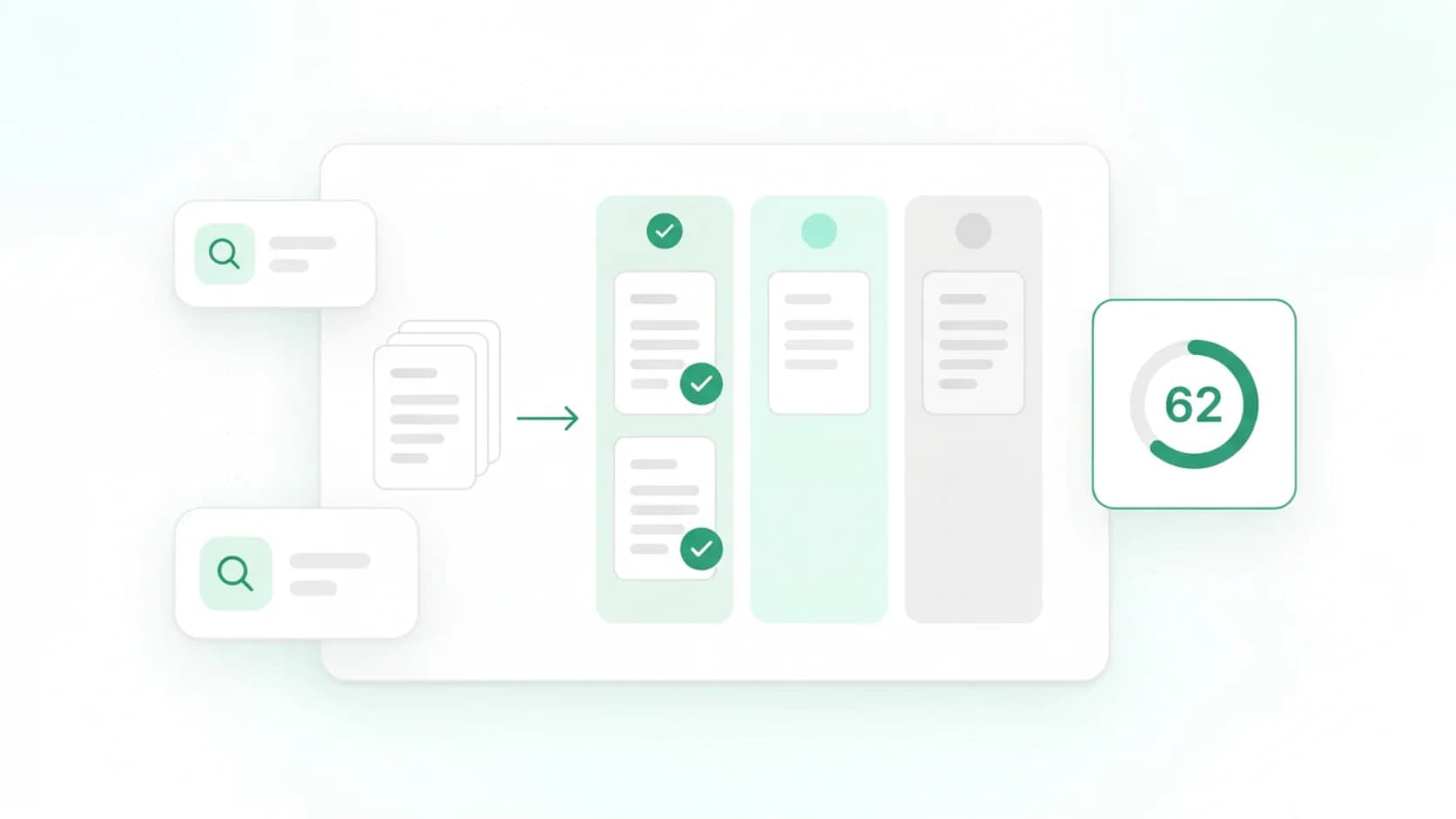
To plan high-volume hiring, start from the number of people who must start work, and divide back through each stage of your funnel. Firstview wrote the sample below for this guide: the role and the stage rates are assumptions for the example, not benchmarks. Use your own rates from last season.
Sample: 60 seasonal store associates across 12 stores, start date in 6 weeks.
| Stage | People needed | How to get the number |
|---|---|---|
| Start work | 60 | The hire count |
| Offers | 75 | 60 / 0.8, if 80% of offers are accepted |
| Store interviews | 150 | 75 / 0.5, if 50% of store interviews end in an offer |
| Completed first interviews | 375 | 150 / 0.4, if 40% pass the first interview |
| Applicants who pass knockouts | 625 | 375 / 0.6, if 60% of them complete the interview |
| Applicants | 1,250 | 625 / 0.5, if 50% pass the knockouts |
The last row is the number of applicants your sourcing must bring in.
The first screen is where these numbers turn into hours. If a recruiter calls the 625 applicants who pass the knockouts, and each completed call takes 20 minutes with notes, the 375 completed screens alone take 7,500 minutes, or 125 hours. Calls that nobody answers come on top. That is about 3 weeks of one recruiter's full time, inside a 6-week window, before anyone books a store interview. The math tells you early whether to add recruiters, give the first screen to store managers or move it to a first interview that applicants take on their own time and a recruiter reviews.
Check the other end too. If each store can train 3 new people a week, 12 stores can start at most 36 people a week, so 60 starts need at least 2 weeks of start dates.
The high-volume hiring process in 10 steps
The high-volume hiring process below runs from the hire count to the first day, with one standard across every location.
- Set the count, the date and the funnel. Agree on the hire count, the start dates and the training capacity with operations, then do the math above for each role.
- Agree the criteria with the hiring managers. Hold one hiring manager intake with the store or site managers and write one set of criteria for each role. Choose 2 or 3 knockout criteria that the job cannot work without, such as weekend shifts, a commute to the site or a forklift certificate, and 3 to 5 criteria for the skills that the job needs. Every location uses the same set.
- Plan the sources for the applicant count. Contact last season's good applicants and former seasonal staff first, because they already know the work. Ask current employees for referrals, post on the job boards that brought hires last season and put a QR code or short link in the store or site. If the count is still out of reach, a staffing agency can cover part of it. Check that your pay is in line with nearby employers for the same shifts.
- Cut the application to what decides. Ask only for the knockouts and contact details, and make the form work on a phone. In iCIMS's 2025 survey of 1,000 US hourly frontline workers, 60% said they had started but not finished an application; as the reason, they cited forms that are too long or take too much time (50%) (iCIMS).
- Post the pay and the shifts. In the same iCIMS research, 51% of retail workers wanted pay posted (iCIMS). Pay and shift patterns in the job post answer the first questions before anyone has to call.
- Screen every applicant the same day. Check the knockouts first, then give every applicant who passes the same short first interview with the same questions. An applicant who waits can accept another job in the meantime.
- Let candidates book the second interview. Each store or site manager publishes interview slots, candidates who pass the first interview book one, and the manager sees only their own candidates and decides within an agreed time, for example 2 working days.
- Tell candidates what happens next at every stage. For retail, iCIMS reports that "poor communication drives 22% of candidate drop-off". Send a message when an applicant moves forward, when they wait and when they are not selected.
- Make the offer, then prepare day 1. Send the offer with pay, shifts and start date in writing within 1 working day, start any background check that the role needs at once and group new hires into start cohorts that fit the training capacity. Send a reminder with the time, place and contact person before day 1.
- Track the funnel every week. Compare drop-off by stage and location, pass rates by applicant group, time to fill, offer acceptance, day-1 no-shows and how many new hires stay 90 days. Fix the stage that loses the most people, and keep this season's good applicants on a list for the next peak.
Sample screening plan for a store associate role
A screening plan for high-volume hiring sets, for each stage, what it checks, who decides and how fast. This sample continues the 60-hire example. It is fictional; use it as a template.
| Stage | What it checks | Who decides | Time target |
|---|---|---|---|
| Application | Weekend shifts, a commute of 30 minutes or less, work authorization | Rules flag, recruiter decides | Same day |
| First interview | 5 fixed questions, each with a written criterion | Recruiter reviews results | Invite on the day of application |
| Store interview | Customer scenario and a store walk-through | Store manager | Within 2 working days |
| Offer | Pay, shifts and start date in writing | Store manager and HR | Within 1 working day |
| Day 1 | Start cohort, trainer, uniform and first-shift details | HR and store manager | Reminder before the start date |
First-interview questions (sample):
- "Which days and shifts can you work in the next 3 months, including weekends?"
- "Tell me about a time you helped a customer who could not find what they needed. What did you do?"
- "What would you do if the line at the register grew while a customer asked you for help on the floor?"
- "Tell me about a time you had to be on time for every shift. How did you manage it?"
- "How will you get to the store, and how long does the trip take?"
Write one criterion for each question before the first interview runs, for example "names a specific action they took for the customer" for question 2. A recruiter then reads the answer against the criterion instead of a general impression.
Before the first interview, also write down the shift pattern, the pay range, the store address and the start date. Candidates ask the same questions many times, and one approved answer keeps every location consistent.
Common high-volume hiring challenges and fixes
The most common high-volume hiring challenges come from a process that was built for one hire at a time.
| Challenge | What it looks like | Fix |
|---|---|---|
| Screening backlog | Hundreds of unread applications, first calls booked days out | Knockouts first, then the same first interview for everyone |
| Candidate drop-off | Applicants stop answering after they apply | Same-day first step, short form, a message at every stage |
| Different standards by location | Each manager hires on a different idea of a good candidate | One criteria set per role, evidence written for each result |
| Recruiter and manager overload | Calls all day, decisions late, mistakes at offer | Funnel math before the peak; managers decide on a deadline |
| No-shows at interviews and day 1 | Booked candidates do not come | Fewer steps, a reminder, a short time from offer to start |
| Good applicants lost each season | Last season's shortlist is in an old spreadsheet | Keep a pool of past applicants and contact them first |
How to keep high-volume hiring fair and legal
You keep high-volume hiring fair when every applicant gets the same criteria and questions, every result has written evidence and you check pass rates by group. Speed makes a bad rule more costly, because one stricter-than-needed knockout removes hundreds of applicants in a week.
- Check pass rates every week. The US Uniform Guidelines say that a selection rate for a group "which is less than four-fifths (4/5) (or eighty percent) of the rate for the group with the highest rate will generally be regarded by the Federal enforcement agencies as evidence of adverse impact" (29 CFR 1607.4). For example, if 50% of one group passes the first interview and 35% of another, 35 divided by 50 is 70%, which is below 80%. Find the criterion that causes the gap and ask whether the job needs it.
- Check the local rules for automated tools. New York City's Local Law 144 "prohibits employers and employment agencies from using an automated employment decision tool unless the tool has been subject to a bias audit within one year of the use of the tool, information about the bias audit is publicly available, and certain notices have been provided to employees or job candidates" (NYC DCWP). In the EU, the European Commission lists "AI tools for employment, management of workers and access to self-employment (e.g. CV-sorting software for recruitment)" as high-risk, with strict obligations from 2 December 2027 (European Commission).
- Keep a person on every decision. Software can sort and summarize, but a recruiter or manager should read the evidence and decide who moves on.
Where software helps in high-volume hiring
Software helps most in the steps that repeat for every applicant: knockout checks, the first interview, scheduling and status messages.
Firstview covers the first screen for store and frontline roles. "Shift availability and location are checked on every CV before anyone reads it." The guide to AI resume screening shows how to check such a tool against your own judgment. You can "invite the whole stage by WhatsApp; applicants answer from their phone in their language", with no app to install. During the interview, "The AI answers questions about shifts, pay, location and the role using only the facts you approve. Anything you leave out, it passes to HR." Each store manager can get access to their own roles only, and "Past applicants stay in your talent pool and are searched first." The AI "evaluates against your criteria and explains every result. It never rejects a candidate on its own." A person decides who moves on.
Two limits matter for volume roles. The integrity checks apply in full on a desktop browser. Firstview does not check references, verify identity or confirm what a CV claims, so those checks stay in your process. For contact center roles, the call center page shows how the same first interview checks a second language.
How we made this guide
We read the 2025 annual JOLTS tables of the US Bureau of Labor Statistics (hires levels, hires rates, quits rates, and layoffs and discharges rates), the BLS outlook for customer service representatives, the iCIMS 2025 State of Frontline Hiring Report press release, 29 CFR 1607.4, the NYC DCWP page on Local Law 144 and the European Commission page on the AI Act. The industry table and the hires-per-100-employees column are our own cut and arithmetic from the BLS tables. The 60-hire funnel, the 20-minute screen time, the training capacity of 3 people a week and the screening plan are fictional samples that Firstview wrote for this guide, not benchmarks or customer data. We compared the steps with 5 of the top US search results for "high volume hiring". No named person has reviewed this guide yet.